.jpg)
Petén, Izabal and the wider Maya area
Mayan Ruins in Guatemala, Honduras and the Yucatán Compared
Sites are not interchangeable: one is the tallest, one is the most finely carved, one is empty of visitors, and choosing badly wastes a day and a long drive.
- Tallest
- Tikal, Temple IV
- Finest carving
- Copán
- Emptiest
- Yaxhá
Mayan ruins are not interchangeable, and treating them as a single category is how people end up driving six hours to a site that does badly the exact thing they came for. The Maya area covers southern Mexico, Guatemala, Belize, western Honduras and El Salvador, and its major sites differ from each other more than the guidebook categories suggest.
The useful distinction is what a site preserves: scale, carving, setting, or solitude. Almost none of them preserve all four.
Scale: Tikal
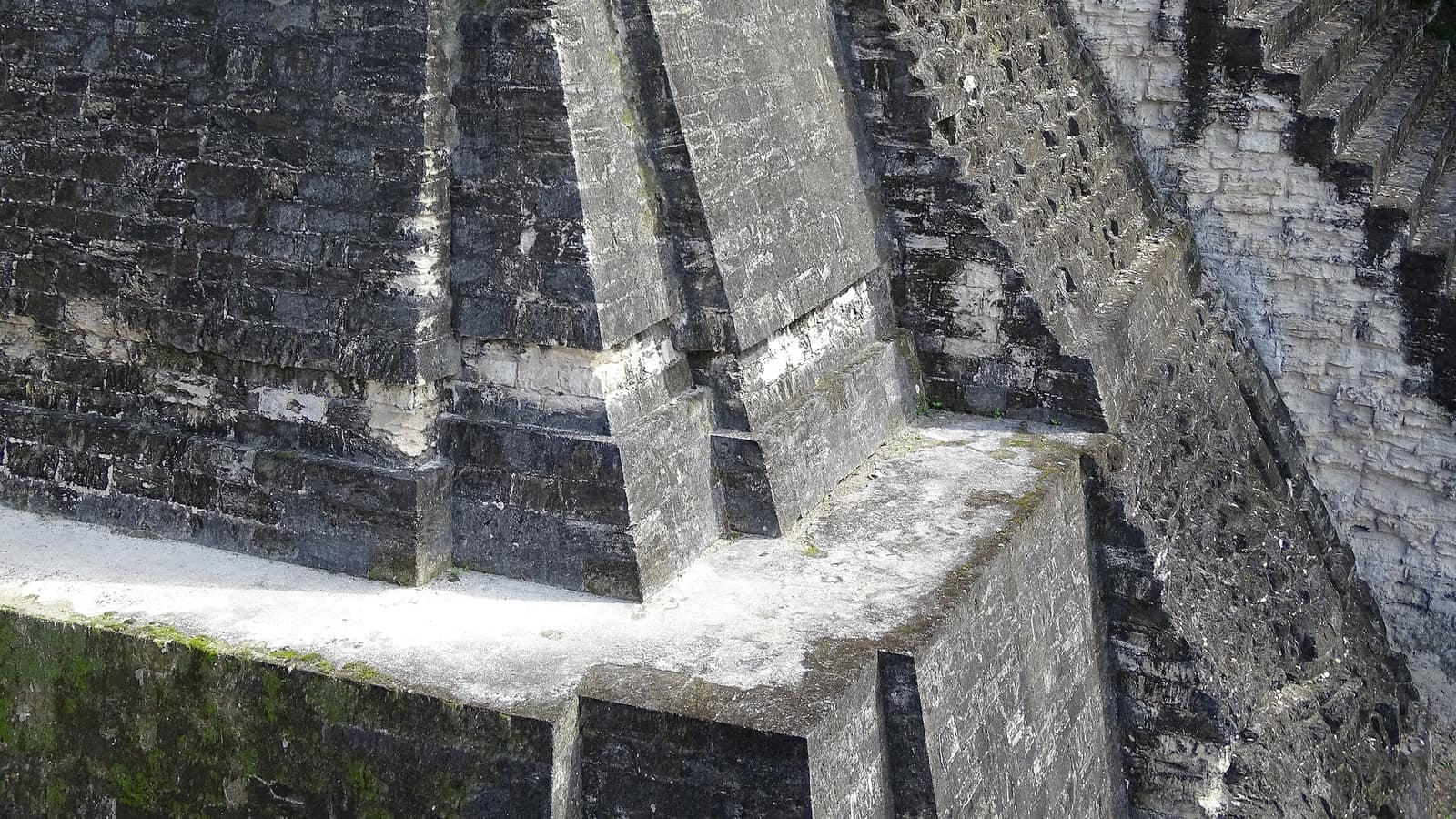
Tikal, in the Petén forest of northern Guatemala, is the one that gets the superlatives. Six temple pyramids, the tallest around 65 m, standing above a canopy full of howler monkeys, spider monkeys and toucans, across a site of some 16 km².
What Tikal does that no other Maya site does is give you the distances. The walk between the Great Plaza and Temple IV takes twenty minutes through forest, which is the correct impression of a city rather than a monument.
Carving: Copán
Copán, just over the Honduran border, is small and dense. Its volcanic tuff carves more deeply than the limestone used elsewhere, which is why its stelae are almost fully three-dimensional and why the hieroglyphic stairway, 62 steps carrying some 2,200 glyphs, exists here and nowhere else.
Copán is a half-day site. Take a guide, because the carving is the entire point and it is illegible without one.
Solitude: Yaxhá and Quiriguá
Yaxhá sits between Tikal and the Belize border above two lakes, with a fraction of Tikal’s visitors and a temple you can watch the sunset from. Quiriguá, in the Izabal lowlands, is a small site holding the tallest carved stelae in the Maya world, one of them over 10 m, and is usually empty.
Both are the answer to wanting Mayan ruins without a queue.
Setting: Palenque and Yaxchilán
Two Mexican sites are worth the detour specifically for where they sit. Palenque, in Chiapas, is built against forested hills at the edge of the Gulf plain, with the mountains behind it and mist in the ruins most mornings. Its architecture is lighter than anything in the Petén: mansard roofs, roof combs, and interior spaces that were built to be used rather than to be climbed.
Yaxchilán, further up the Usumacinta on the Guatemalan border, is reached only by boat along the river, which does more for the impression of the place than any of its buildings. Its carved lintels are the best-preserved narrative sculpture in the Maya area.
How long each site actually takes
- Tikal. A full day at minimum, two if you want a dawn and a dusk in the same visit. Staying inside the park rather than in Flores is what makes the early start possible.
- Copán. Half a day at the site, an hour in the museum. Two nights in the town.
- Yaxhá. Half a day, and it combines with Tikal as a separate morning rather than an add-on.
- Quiriguá. Ninety minutes, and it sits on the road between Guatemala City and the Caribbean coast, which is the only reason most people see it.
- Palenque. Half a day for the site and a full day if the museum and the waterfalls nearby are included.
Reading a site without a guide
Three habits make an unguided visit better. Look at the masonry grade first, because fine stonework marks the buildings that mattered and rough work marks the ones that did not. Look for the free-standing stelae before the pyramids, since they carry the dates and the names and are what the site was recording about itself. And find the ball court, which is usually small, low and easily walked past, and is present at almost every site of any size.
What to skip, and when
Chichén Itzá is the most visited Maya site and the most restored; it is also a day-trip destination from Cancún with the crowds that implies. If you have seen Tikal and Copán, it adds little except El Castillo itself.
Season matters more than most people expect: the Petén roads are worse in the wet months and the heat is constant year-round. Go early in the day, everywhere, always.
The Guatemala section covers the highland sites and the towns; the lowland route through Petén is a separate trip from the highland circuit and rarely combines well with it in under two weeks.
Frequently Asked Questions
Which Mayan ruins should you visit if you only see one?
Tikal, for the scale and for the forest it stands in. Copán is the better site for carving and the worse site for the sense of a city; Chichén Itzá is the most crowded and the most restored.
How long do you need at Tikal?
A full day at minimum, and two if you want a sunrise. The site covers 16 square kilometres and the walking between complexes is a serious part of the visit.
Is the Tikal sunrise worth it?
It is a gamble on cloud, and what you actually get in the dry season is howler monkeys and mist rather than a sunrise over the canopy. The early entry is worth it for the wildlife regardless.
What makes Copán different?
The stone. Copán's volcanic tuff let sculptors work in deep three-dimensional relief, and the hieroglyphic stairway carries the longest Maya inscription anywhere. The site itself is small.
Are there ruins without crowds?
Yaxhá, between Tikal and the Belize border, has a fraction of the visitors and a lakeside setting. Quiriguá, in Guatemala's Izabal, has the tallest carved stelae anywhere and almost nobody.
Do you need a guide?
At Copán yes: the carving is unreadable without one. At Tikal a guide helps for the first few hours and matters less afterwards, since the scale speaks for itself.
Can you climb the temples?
At some, on wooden staircases installed for the purpose; the original stone stairs are mostly closed. Rules vary by site and change, generally in the direction of more restriction.
When is the best time to go?
The dry season, November to April, for the roads and the trails. The Petén is hot and humid year-round and mornings are always better than afternoons.