Honduras, Nicaragua, Costa Rica, Ecuador and the Galápagos
Honduras, Nicaragua, Costa Rica, Ecuador and the Galápagos, covered where they connect to the rest of this region rather than exhaustively.
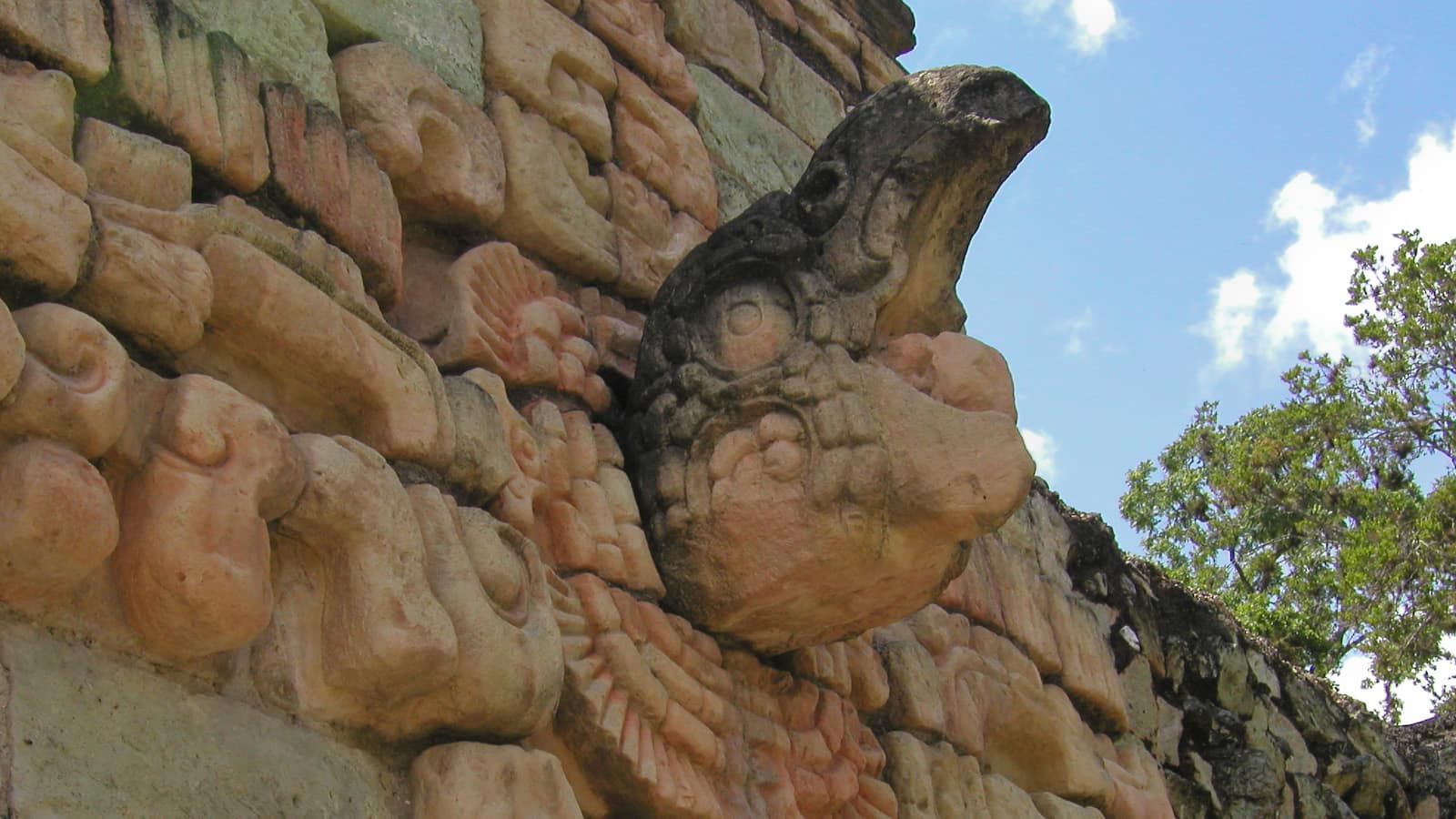

These countries sit at the edges of this site. Each gets the subjects that a traveller moving through Central America actually crosses: Copán on the way out of Guatemala, Ometepe on the way down Nicaragua, the cloud forest in Costa Rica, and the Galápagos as the expensive, entirely separate proposition it is.
- Copán Copán, Honduras
Small, dense and carved more finely than any other Maya site, the result of a soft volcanic tuff that took three-dimensional relief where limestone could not.
- Galápagos animals Galápagos, Ecuador
The animals are the reason to go and they are not evenly distributed: most species are tied to particular islands, and several are tied to particular months. What lives there, where it actually is, and what a visit is allowed to do.
Copán, Honduras
The most finely carved Maya site anywhere, and small enough to see properly in a day. It sits close to the Guatemalan border, which is why it usually appears on a Guatemala itinerary rather than a Honduran one.
Ometepe, Nicaragua
Two volcanoes rising from Lake Nicaragua, joined by an isthmus, reached by ferry from San Jorge. Concepción is the symmetrical active one; Maderas is the forested, wetter climb.
Costa Rica's cloud forest
Monteverde and the reserves around it are the accessible version of a habitat that is difficult to see anywhere else: high, permanently wet, and busy enough that early starts matter more than they do elsewhere in the country.
The Galápagos
An archipelago 900 km off Ecuador, reached by flight from Quito or Guayaquil, and governed by park rules that put a guide with every group on every landing. The choice is between a live-aboard cruise, which reaches the outer islands, and land-based stays, which do not.
Why the Galápagos are arranged the way they are
The archipelago sits on the Nazca plate, which is moving east over a stationary hotspot at roughly 58 km per million years. The islands therefore get older from west to east: Fernandina and Isabela are the young volcanic end and still erupt, while the drowned seamounts of the Carnegie Ridge running east towards the mainland reach about 20 million years. That age gradient is the reason the wildlife differs island to island, and it is the geological half of the story the animals are usually told without.
Almost all of it is protected. Ecuador declared 97 per cent of the land area a national park in 1959, the islands were inscribed on the UNESCO World Heritage list in 1978 as part of its first group of sites, and the surrounding marine reserve, created in 1986, was extended in 1998 to about 133,000 square kilometres. Access rules follow from that rather than from operators, and they are the reason a licensed guide is not optional.
For what actually lives there, see Galápagos animals. The mainland cloud forest above is the other place in this section where the wildlife is the reason to go.
Crossing between them
Central America is small enough that the borders shape an itinerary more than the distances do. Guatemala to Copán is a half-day crossing at El Florido; Guatemala to Nicaragua overland means a full day through El Salvador or Honduras. International shuttles run the tourist route daily and cost several times what the local buses do for a fraction of the trouble.
What each of these countries is actually for
Taken as a group these five are easy to file as filler between the two halves of this site, and each of them does one thing better than its neighbours. Honduras has the carving, and almost all of it is at Copán. Nicaragua has the lakes and the volcanoes standing in them, and the colonial pair of Granada and León at a fraction of Antigua's prices. Costa Rica has the protected habitat and the infrastructure to see it, which is also why it costs what it does. Ecuador has the shortest distances on the continent, with the sierra, the Amazon and the coast all within a day of Quito. The Galápagos are their own proposition entirely.
Costs, and where they diverge
The price gradient across these countries is steeper than the distances suggest. Nicaragua and Honduras are among the cheapest countries in the region to travel in; Costa Rica is the most expensive on the isthmus by a wide margin, with park fees, transport and accommodation all several times the Nicaraguan figure; Ecuador sits between them and uses the US dollar, which removes the currency arithmetic. The Galápagos are not comparable to any of them: the flight, the park entry fee and either a berth or a week of day trips put a first visit in a different budget category from everything else on this site.
Seasons across the isthmus
The dry season runs roughly December to April on the Pacific side of Central America, which is the side these routes mostly follow. The Caribbean coasts of Nicaragua, Honduras and Costa Rica run on a different pattern and are wet for much more of the year, with a short drier window around September and October when the Pacific side is at its wettest. The Galápagos have their own two seasons: warmer and wetter with calmer seas from December to May, cooler and rougher with better diving from June to November.
Where these fit in a longer trip
Copán belongs at the end of a Guatemala highland circuit. Ometepe belongs on the way down the isthmus. Monteverde and the Costa Rican reserves are usually a trip in themselves, and the Galápagos are a separate holiday with a separate budget that nobody adds to anything else.
Frequently Asked Questions
Is Copán worth crossing a border for?
If you have seen Tikal and want carving rather than scale, yes. It is a half-day site and the crossing from Guatemala at El Florido is routine.
How do you get to Ometepe?
Ferry from San Jorge, near Rivas, to Moyogalpa or San José del Sur. Crossings take about an hour and are rougher than the distance suggests when the lake is up.
Is Monteverde better than Costa Rica's other reserves?
It is the most accessible cloud forest and therefore the busiest. Going at opening time is the difference between a wildlife walk and a queue.
What does a Galápagos trip actually cost in time?
Flights from Quito or Guayaquil, a park fee, and then either a live-aboard cruise of four to eight days or land-based stays with day trips. The cruise reaches the outer islands; the land option does not.
Can you combine these countries overland?
Yes, and the borders take longer than the distances. International tourist shuttles run the main route daily; local buses cost a fraction and a great deal more patience.